
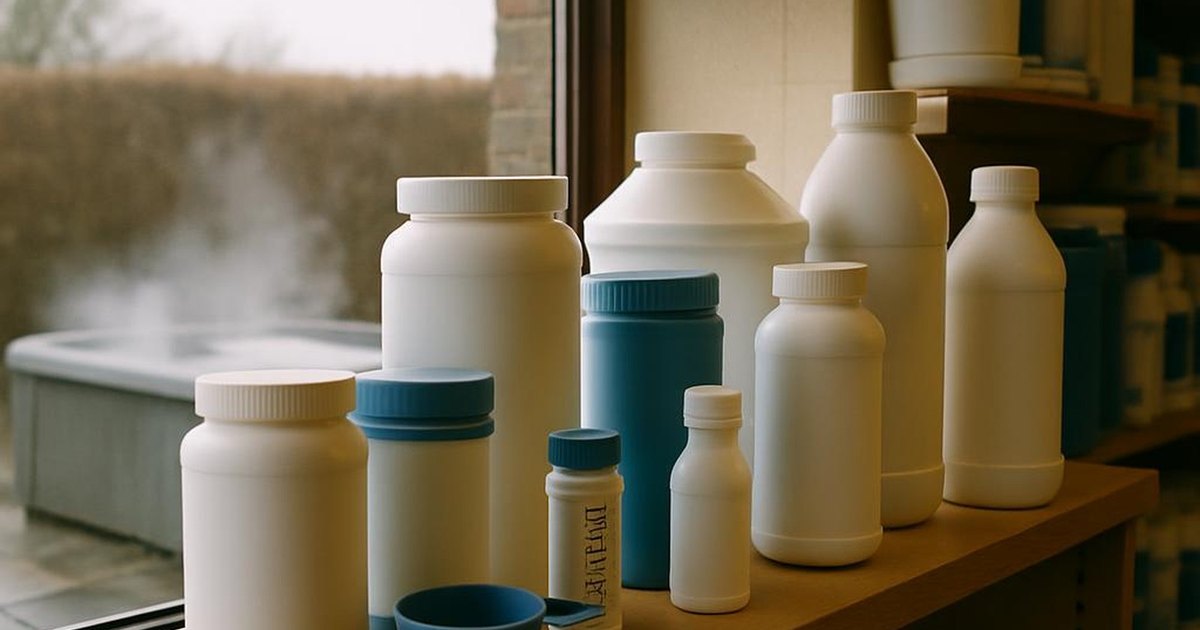
A hot tub winter shopping list is shorter than most people expect: a sanitiser, a shock, something to move pH each way, test strips, a filter cleaner and a cover treatment. Everything else is either a nice-to-have or a fix for a problem you may never get. Here’s what each one does, which brands on our shelf make it, and where spending a bit more pays off.
We stock several brands and we’d rather you bought the right one than the dearest one. Where Deep Blue is the better buy we’ll say so, and where a Plastica Relax or an own-label tub does the same job for less we’ll say that too.
Why winter changes the list
The water is still 38°C, so the chemistry doesn’t change much. What changes is how you use the tub. The cover stays on for longer, which means less aeration and a pH that tends to drift down rather than up. Fewer bathers on weekdays means sanitiser lasts longer, then a full tub at the weekend uses a lot at once. And the cover itself takes a beating from rain, frost and wet leaves, so it needs looking after if it’s going to keep the heat in.
So the list below leans towards a shock you can use after a busy night, a pH plus rather than only a pH minus, and a cover cleaner. Test before you add anything. A strip takes ten seconds and saves you buying things you don’t need.
The hot tub winter shopping list by brand
| Item | What it does | Options on our shelf | Our pick |
|---|---|---|---|
| Sanitiser (chlorine granules) | Daily residual that keeps the water safe. Aim for 3 to 5 mg/l free chlorine. | Deep Blue Professional stabilised granules; Plastica Relax stabilised granules; own-label “Quality product” granules | Deep Blue Professional for the neutral pH; own-label if you’re on a budget |
| Sanitiser (20g tablets) | Slow release from a floating dispenser, two to four days per tablet. | Deep Blue mini 20g; Plastica Relax small chlorine tablets; own-label mini 20g | Any of the three; buy the pack size that suits your tub |
| Sanitiser (bromine) | For bromine tubs. Aim for 4 to 6 mg/l. | Deep Blue mini bromine 20g; Plastica Relax bromine tablets | Deep Blue 1kg for one tub, Relax 5kg for a holiday let |
| Shock | Burns off bather waste after heavy use. Non-chlorine shock lets you bathe again sooner. | Deep Blue Spa Oxy Shock; Plastica Relax non-chlorine shock; Deep Blue spa chlorine shock granules | Non-chlorine for weekly use, chlorine shock for a cloudy or smelly tub |
| pH minus and pH plus | Keeps pH in the 7.2 to 7.6 band where chlorine works and skin is comfortable. | Deep Blue pH minus and pH plus; High Quality own-label pH minus and plus | Same chemistry in each tub; buy on price |
| Test strips | Tells you what to add before you add it. | Deep Blue Strip-Ease 4-way or 6-way; Deep Blue 3-in-1; Relax 3-in-1 | 4-way if you use chlorine or bromine, 6-way if you want hardness and stabiliser too |
| Filter cleaner | Overnight soak that strips body oils out of the cartridge. | Deep Blue cartridge filter cleaner (soak) | One bottle lasts the winter |
| Cover cleaner and preserver | Cleans the vinyl and stops it soaking up water. | Deep Blue spa cover cleaner and preserver spray | Use it now, before the frosts |
Sanitiser: granules, tablets or bromine
If you already have a routine that works, don’t change it in November. Just make sure you’ve enough to see you through to spring.
Granules give the most control. You weigh out a dose against your litres, the level comes up within an hour, and nothing carries on dosing while the tub sits empty. As a typical label dose, around 2g of stabilised chlorine granules per 1,000 litres raises free chlorine by about 1 mg/l. Deep Blue Professional, Plastica Relax and our own-label tub are all stabilised chlorine granules, so the dose is similar whichever you buy. The Deep Blue granules are listed as rapid dissolve with a neutral pH, which matters in a small volume where pH swings show up fast.
Tablets suit people who want to drop two 20g tablets in a dispenser and forget about it for a few days. Deep Blue, Plastica Relax and the own-label mini tablets all release over two to four days according to their listings. They’re acidic, so expect to use a little pH plus through the winter, and change the water every three months or so because the stabiliser builds up.
Bromine owners have two choices here: Deep Blue mini bromine tablets in a 1kg tub, or Plastica Relax bromine tablets in 5kg. The chemistry is the same; the 5kg makes sense if you run more than one tub.
Shock: which type for which problem
Non-chlorine shock (potassium monopersulphate) is the one to use every week or after a crowd. It oxidises the sweat, lotion and skin cells that chlorine would otherwise waste itself on, and most labels let you bathe again within about fifteen minutes. A typical label dose is around 20g per 1,000 litres. Deep Blue Spa Oxy Shock and Plastica Relax non-chlorine shock do the same job; both listings say they also reactivate spent bromine, so bromine tubs want this type too.
Chlorine shock is for when the water has already gone cloudy or smells. Deep Blue spa chlorine shock granules are listed at 70 per cent available chlorine, so a little goes a long way. Leave the cover off while the level drops back below 5 mg/l before anyone gets in.
Balance: pH both ways, and alkalinity if it keeps wandering
pH minus is sodium bisulphate and pH plus is sodium carbonate whichever label is on the tub. Buy on price and pack size. Deep Blue pH minus and Deep Blue pH plus come in 1kg, and so do the High Quality pH minus and pH plus. As a typical label dose, around 10g per 1,000 litres moves pH by a tenth or two; add, run the jets, wait an hour and retest.
If pH won’t stay put, the alkalinity is usually too low. Deep Blue Spa TA Plus is sodium bicarbonate and brings total alkalinity up into the 80 to 120 mg/l band. Follow the dose on your pack rather than a figure from a blog.
The two things people forget
- Filter cleaner. Rinsing with a hose doesn’t shift oils. Soak the cartridge overnight in Deep Blue cartridge filter cleaner once a month and the water stays clearer on less chlorine.
- Cover care. A cover that has soaked up water is heavy, cold and lets heat out. Deep Blue cover cleaner and preserver cleans the vinyl and leaves a coat that stops water getting in. Do it on a dry afternoon before the first frost.
FAQ
Do I need different chemicals for an inflatable hot tub in winter?
No. Same sanitiser, same shock, same pH products, dosed to the smaller volume. The only extra is a floating thermal blanket under the lid, which is about heat rather than chemistry.
Can I mix brands?
Yes, as long as you don’t mix chlorine and bromine in the same water. Deep Blue granules one month and Relax the next is fine. Never mix dry chemicals together in a bucket, and never put a chlorine shock and a non-chlorine shock in at the same time.
How much sanitiser will a winter take?
For a 1,200 litre tub used a few times a week, a 1kg tub of granules typically sees out a season between water changes. Heavy users and holiday lets want 2kg or 5kg. Tablets go at roughly one or two a week.
Is the Deep Blue option always the better one?
No. For pH minus, pH plus and tablets the products are close enough that price should decide. Deep Blue earns its place on the granules, the oxy shock and the cover spray, where the listed spec is better or there’s no other option on the shelf.
Next step
Everything on this hot tub winter shopping list is in the hot tub section: hot tub chlorine, shock treatments, water balancing and cleaners, with bromine and test strips alongside. Test first, buy what the strip tells you to, and the tub will see you through to March.